Download
Start with the public, editable Gloss v1 deck.
Get the .pptx ↓An open ACID test for AI-made presentations
Gloss is the presentation itself: a deliberately complicated 20-slide artifact that AI struggles to recreate as real, editable slides. The deck is the challenge. The bundled tools make native quality easy to measure.
Remember Acid1, Acid2, and Acid3? Gloss is ACID for presentation decks made by AI.
Looks right is not enough.
Text stays text. Charts stay charts. Masters still master.The smallest useful experiment
Gloss is the presentation; the checker is its measuring tape. Download the native deck, move one object on each of two slides, and run the checker. It reports those two native objects—not a score, not a dashboard, not a wall of release metadata.
Start with the public, editable Gloss v1 deck.
Get the .pptx ↓Move one object on one slide and another object elsewhere.
Keep everything native.One changed object becomes one clear finding.
uv run gloss check edited.pptx
uv run gloss check edited.pptxThe artifact is the benchmark
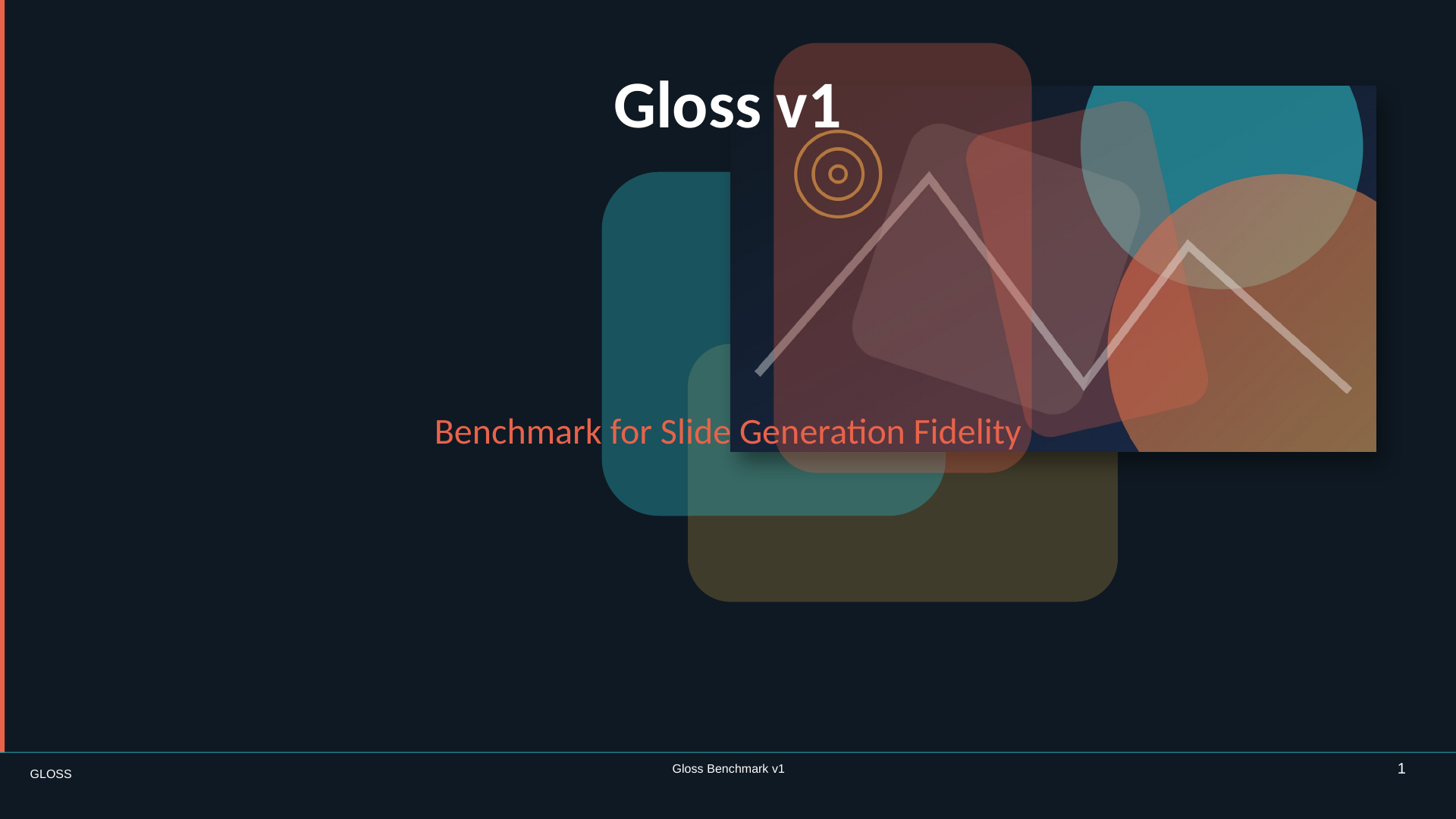
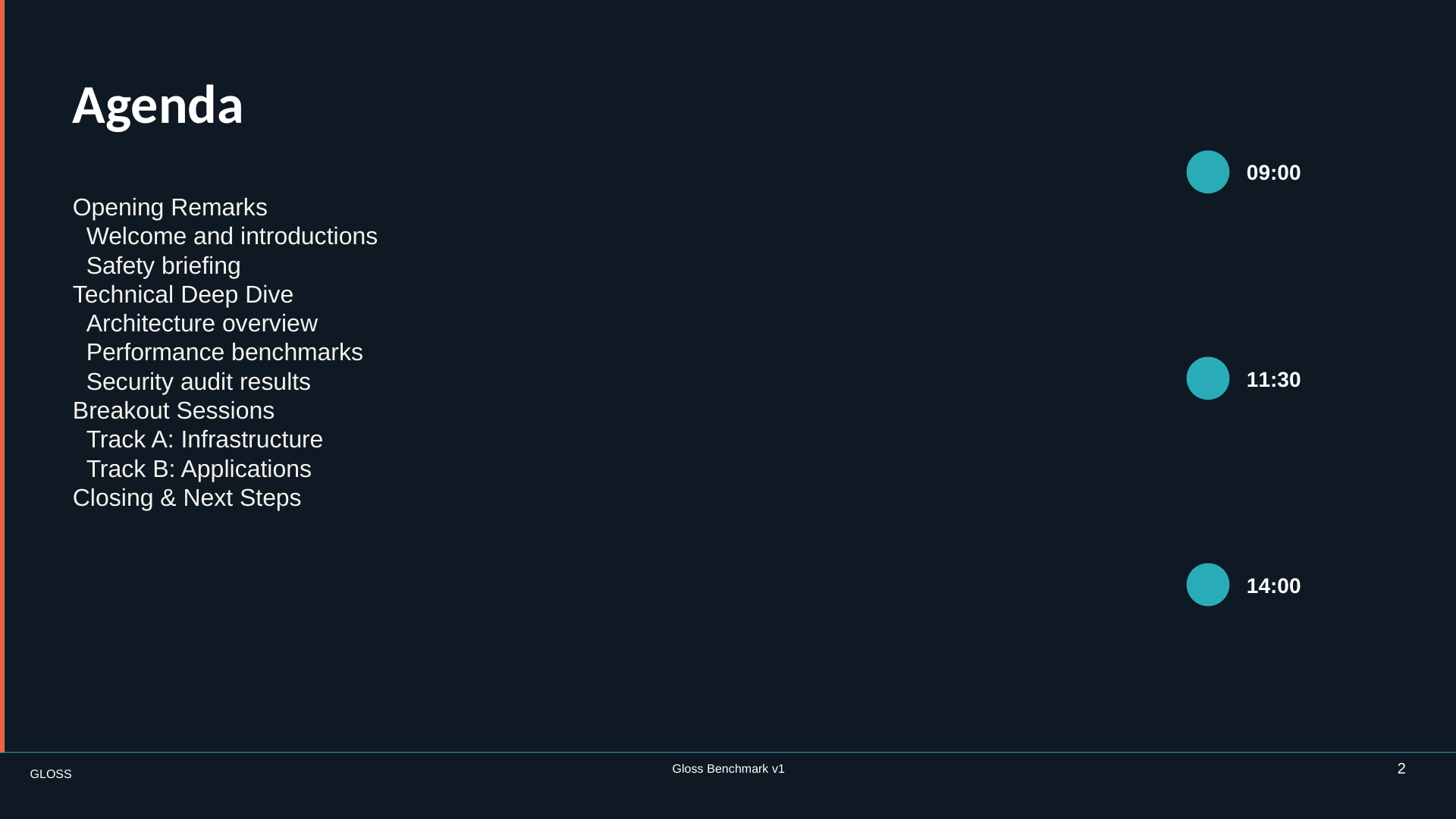
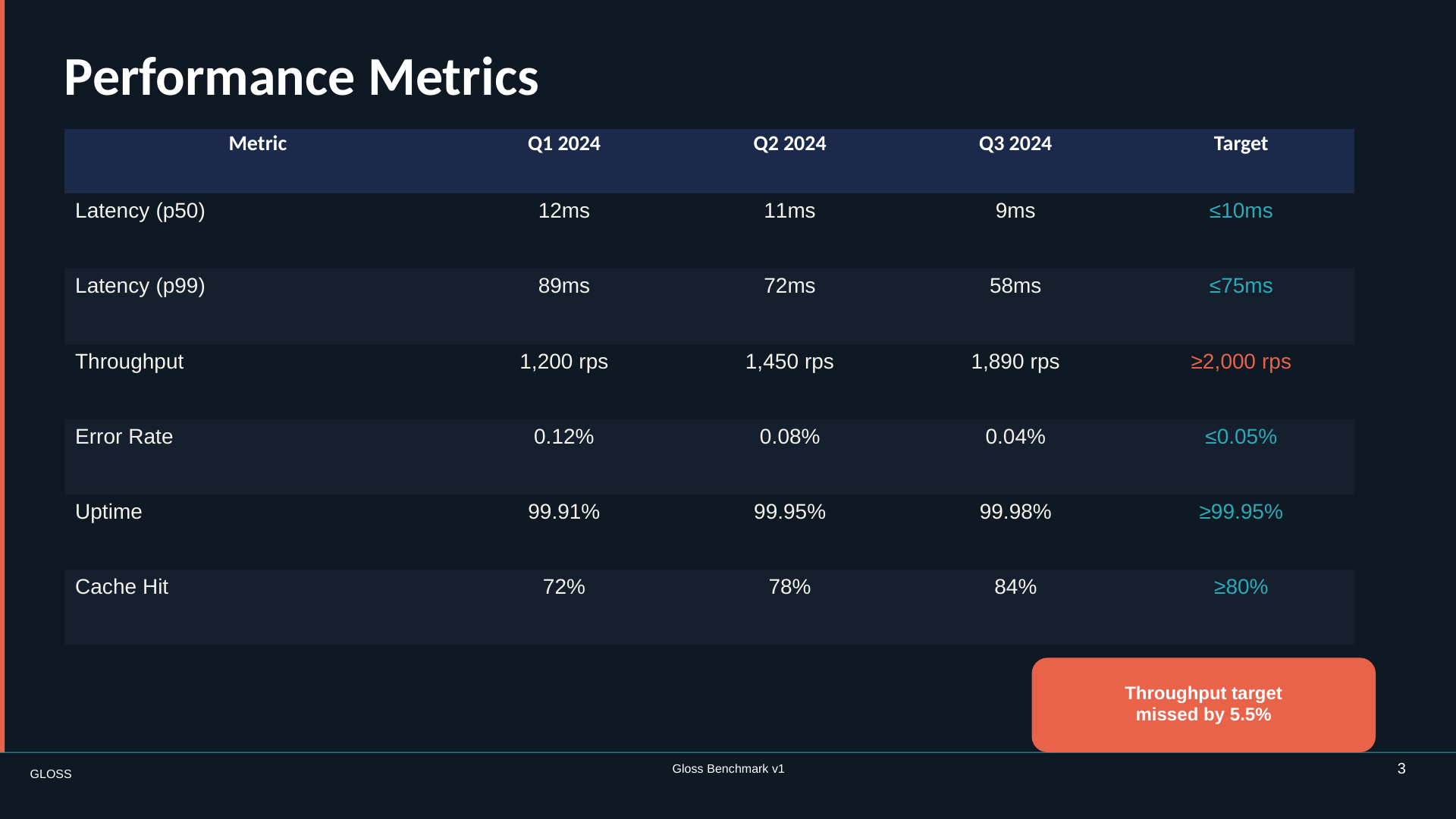
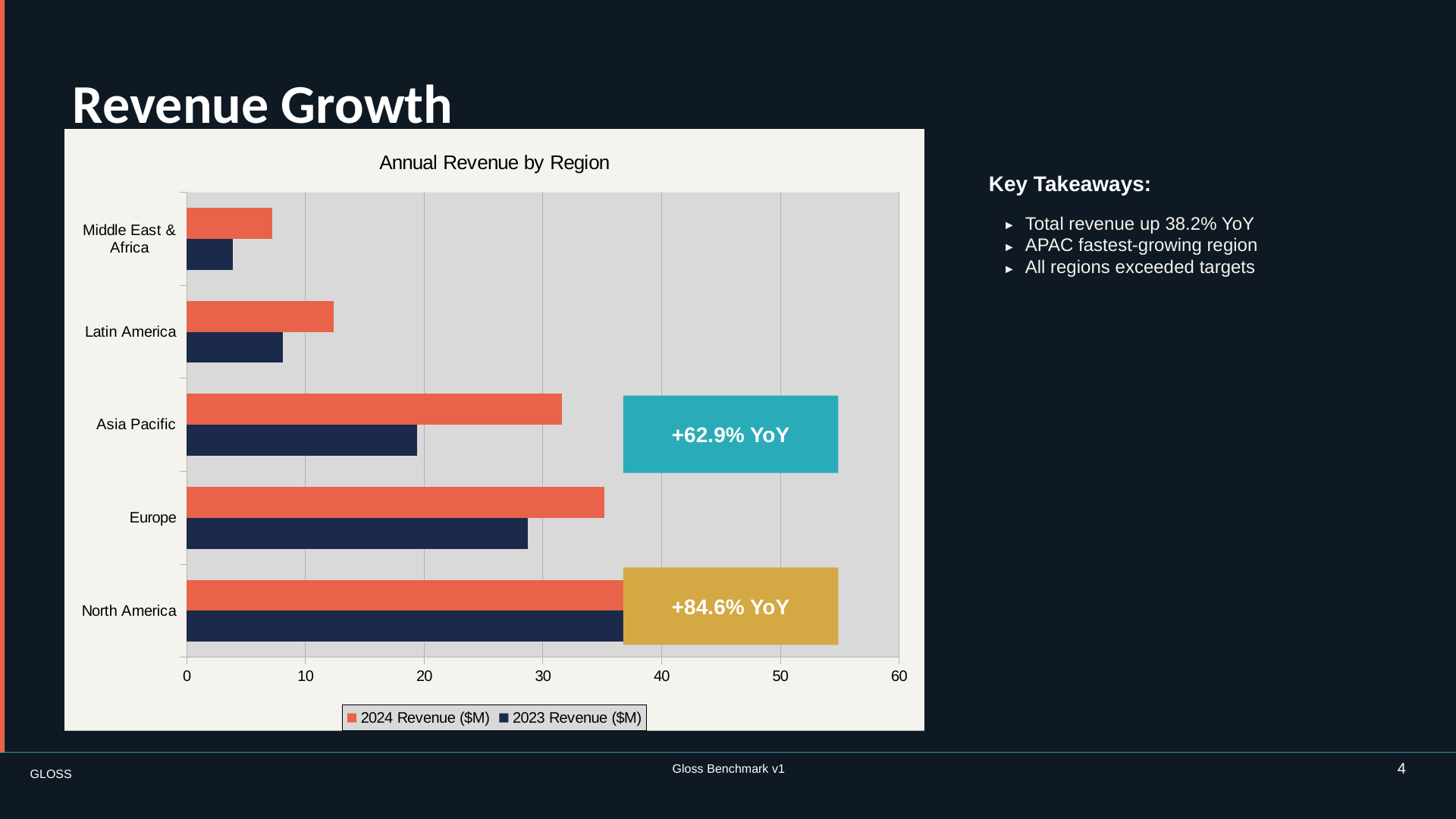
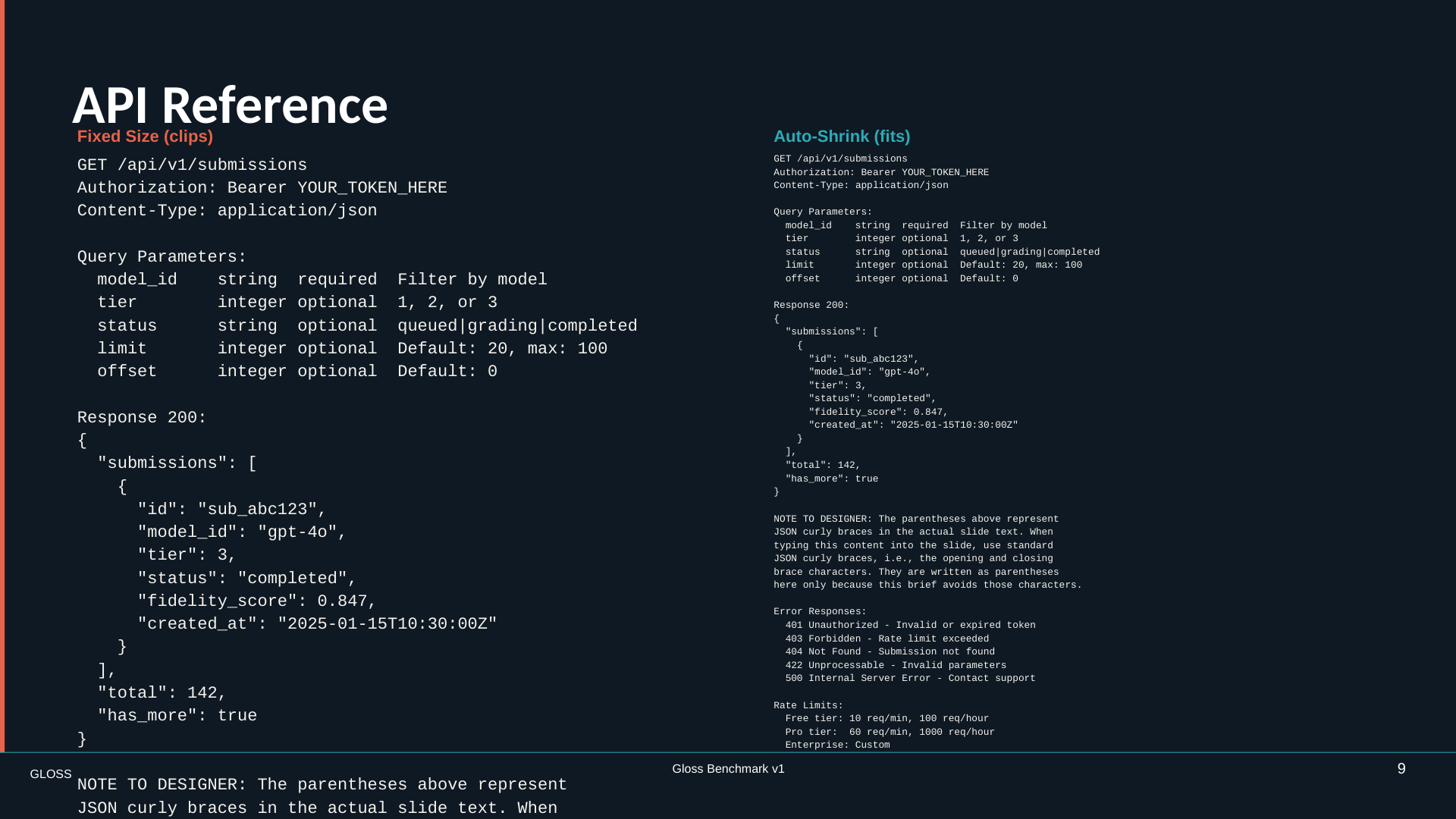
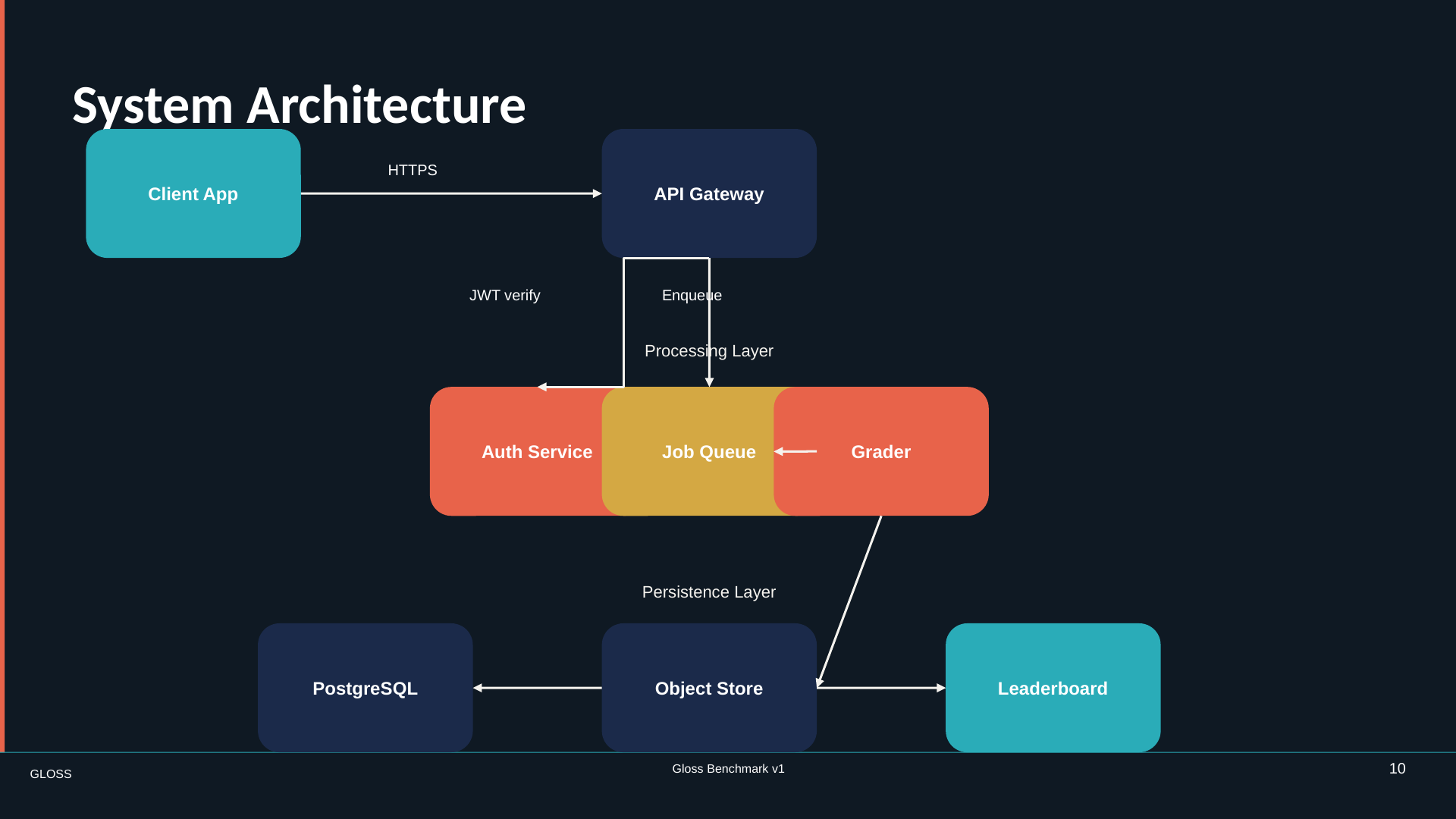
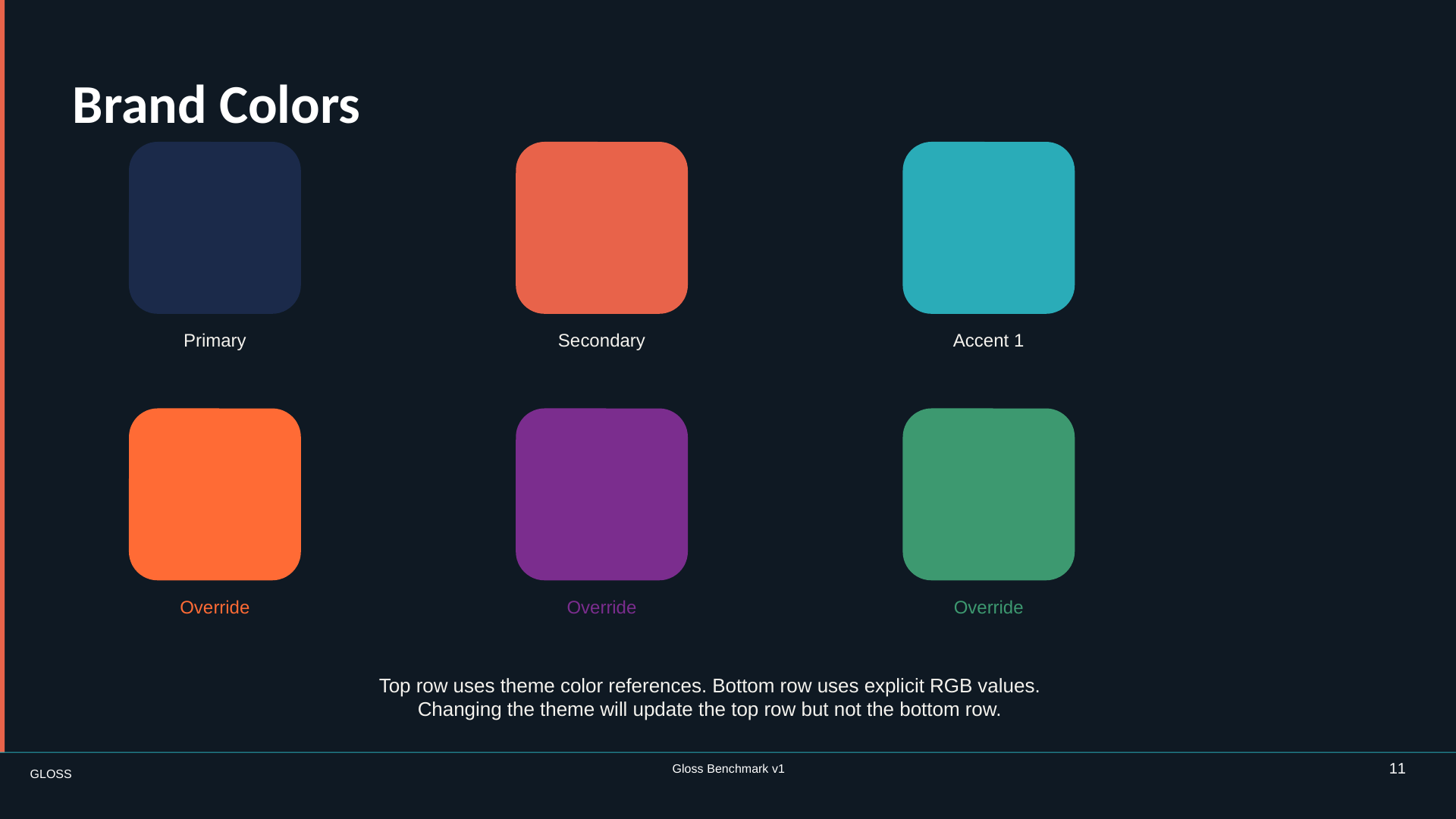
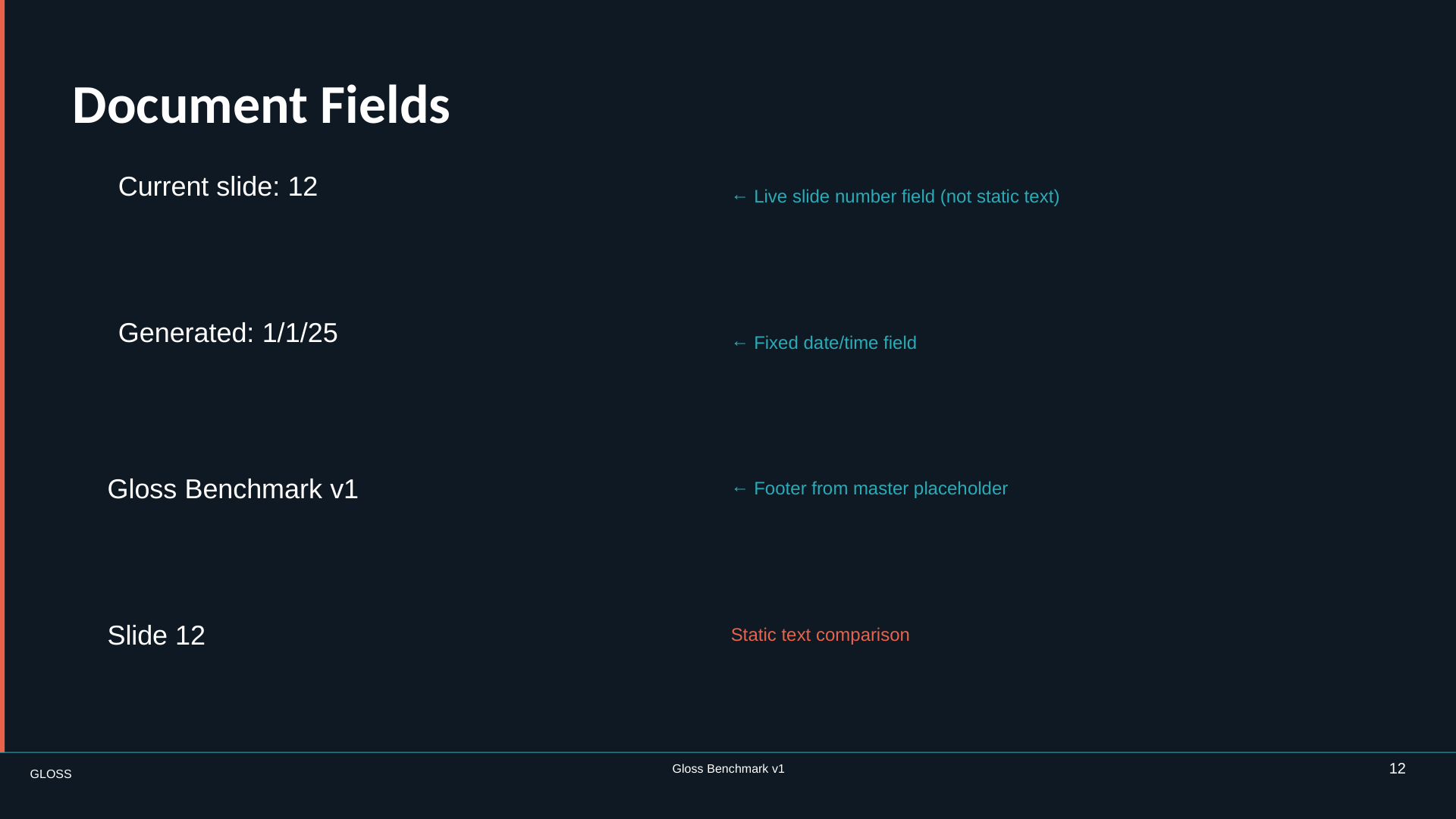
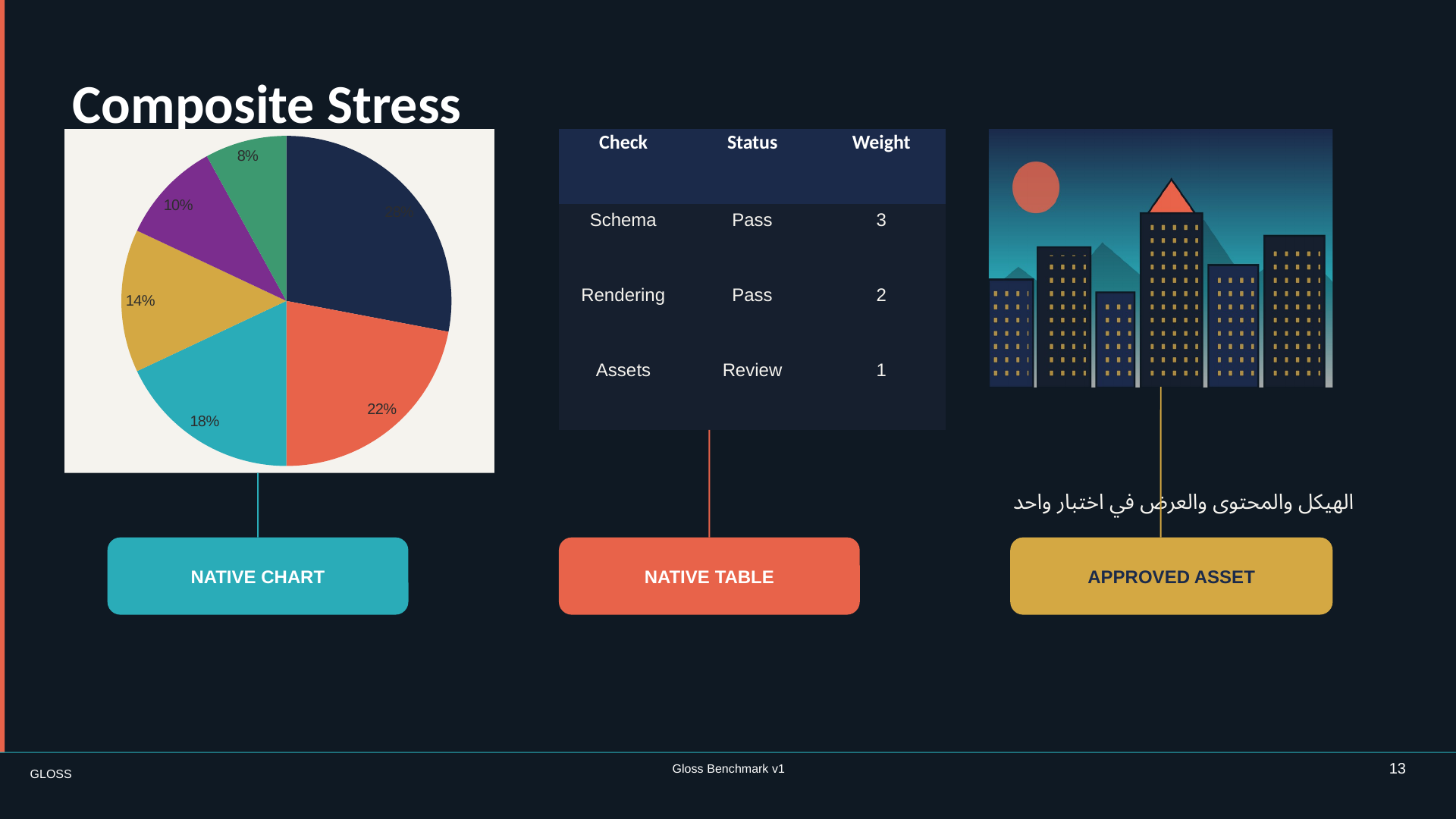
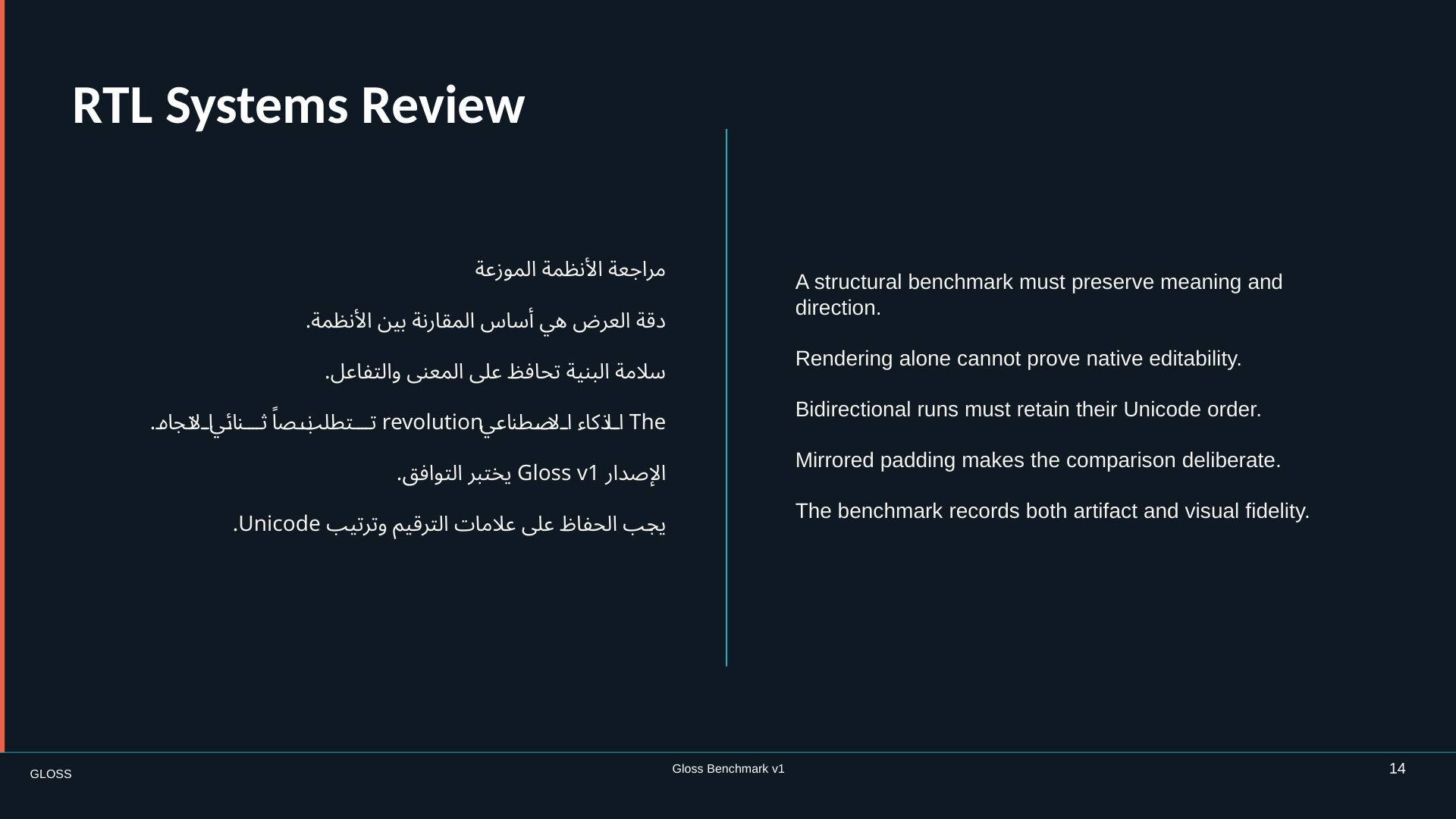
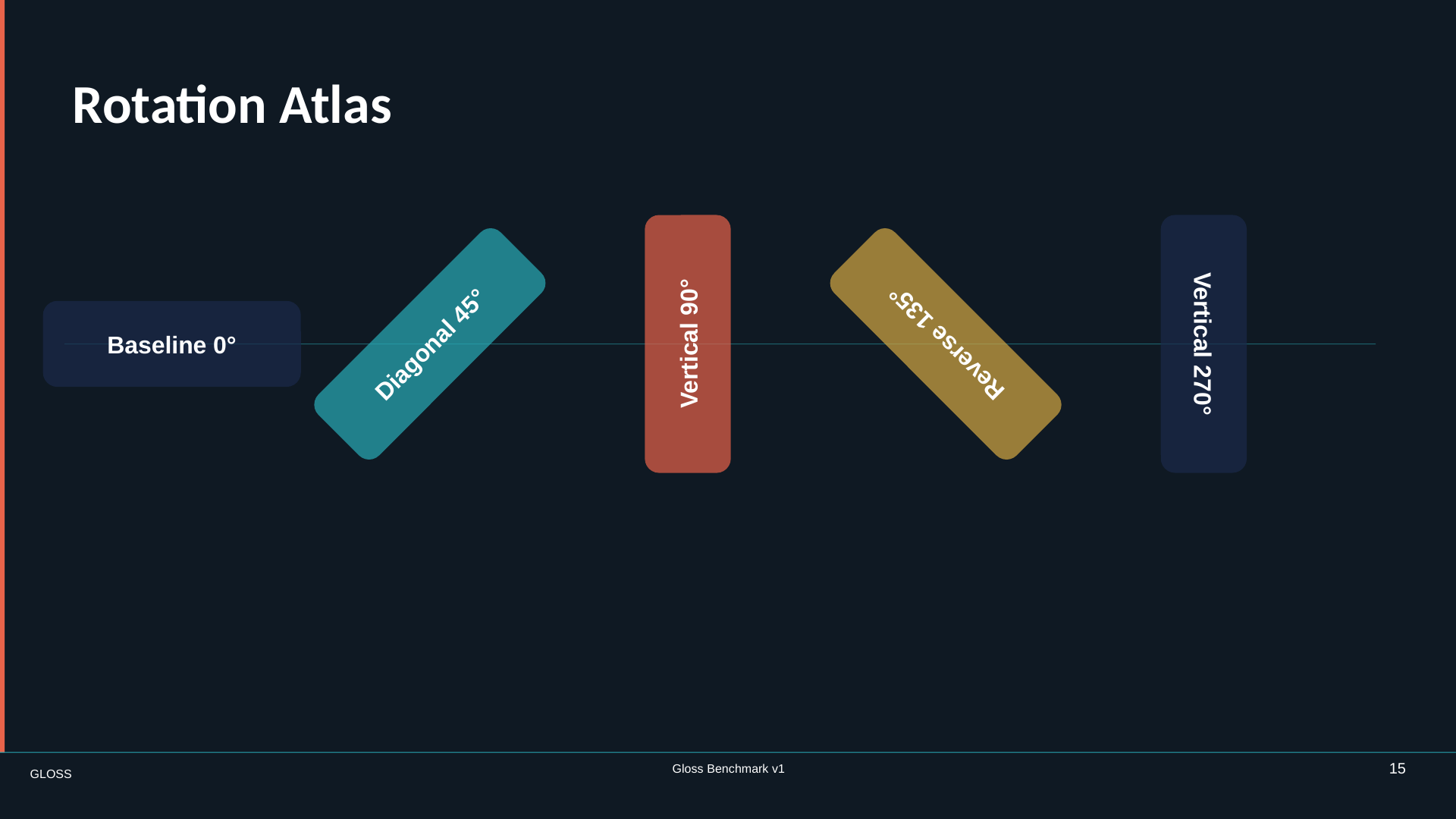
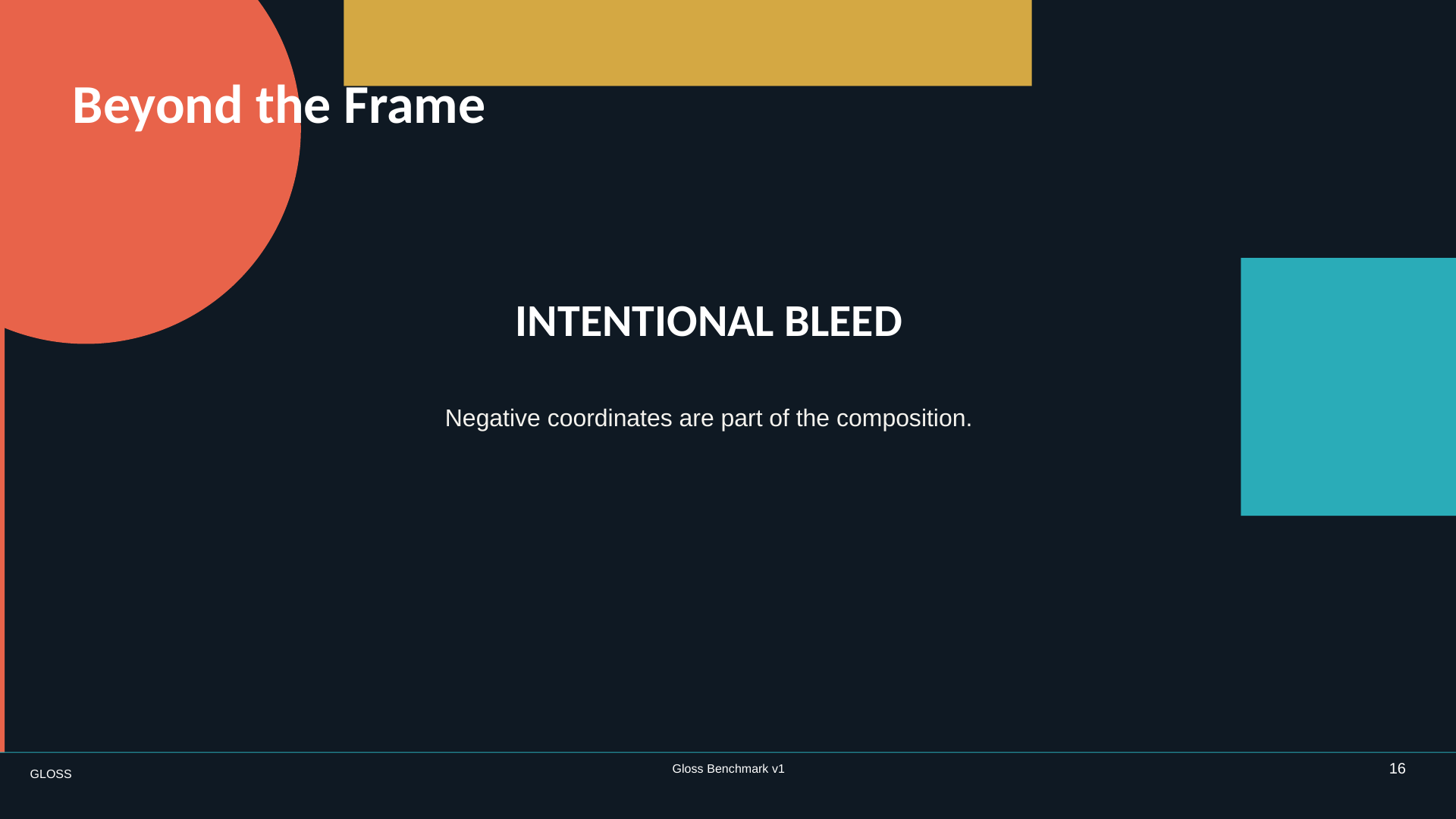
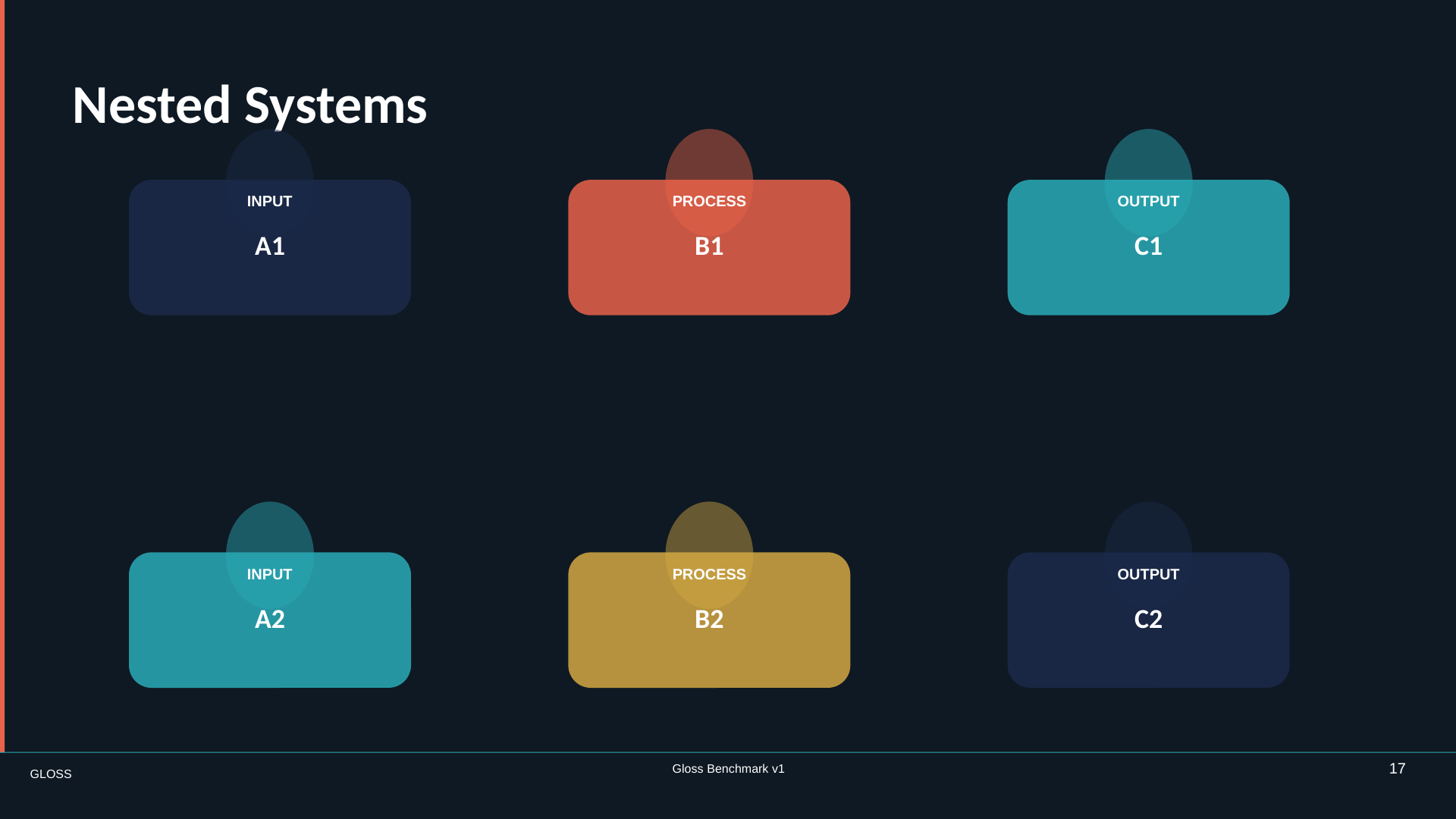
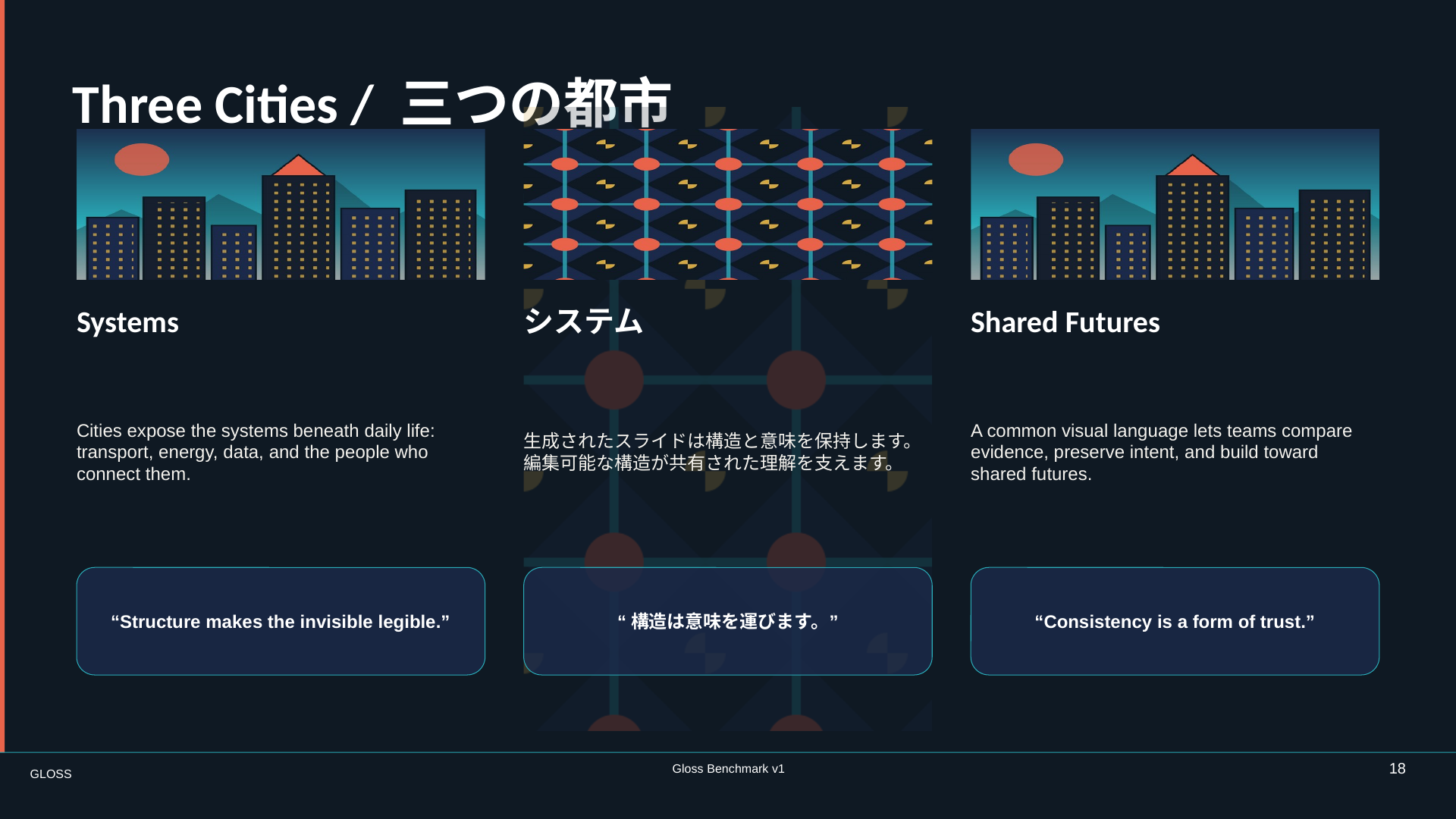
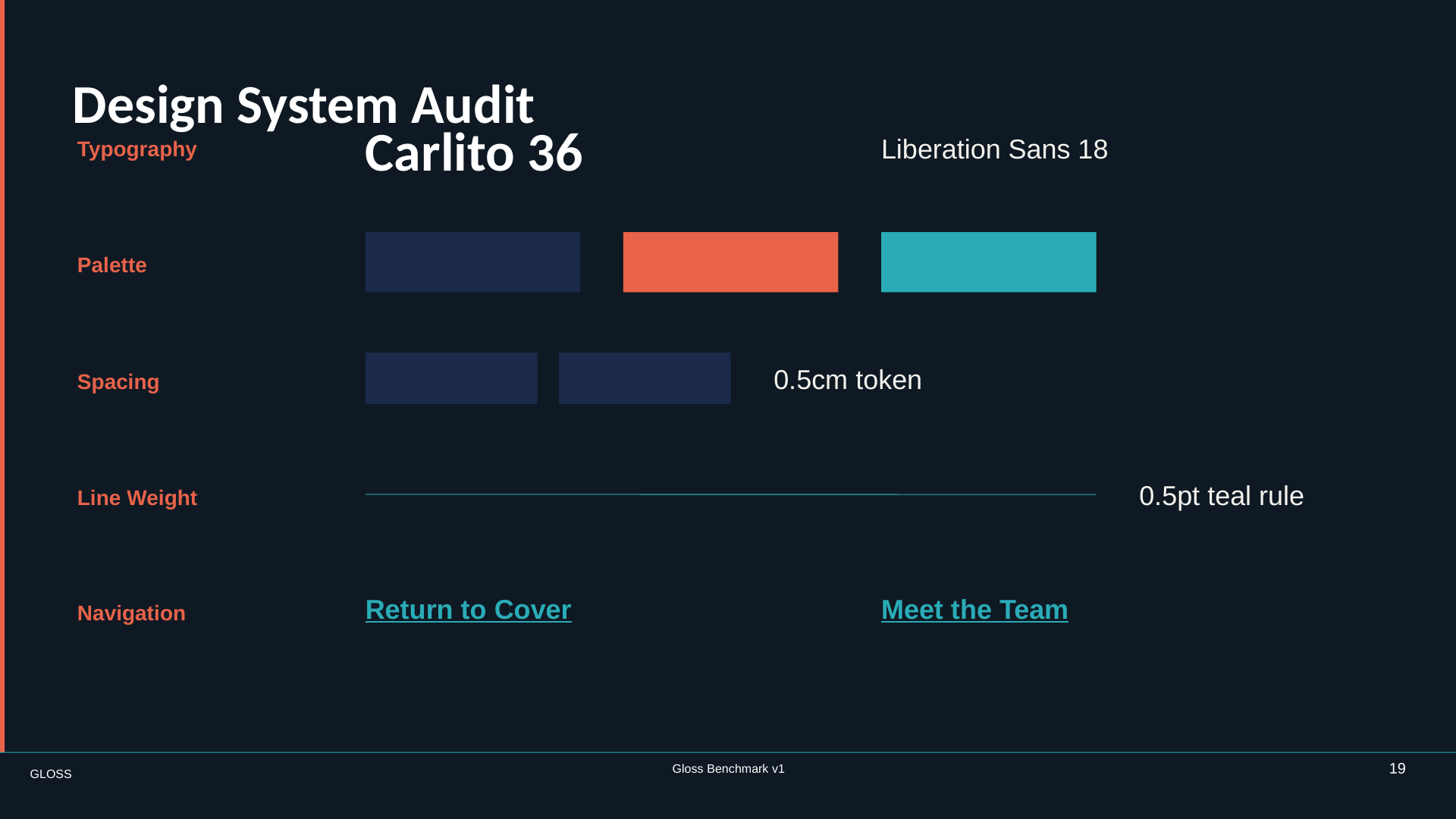
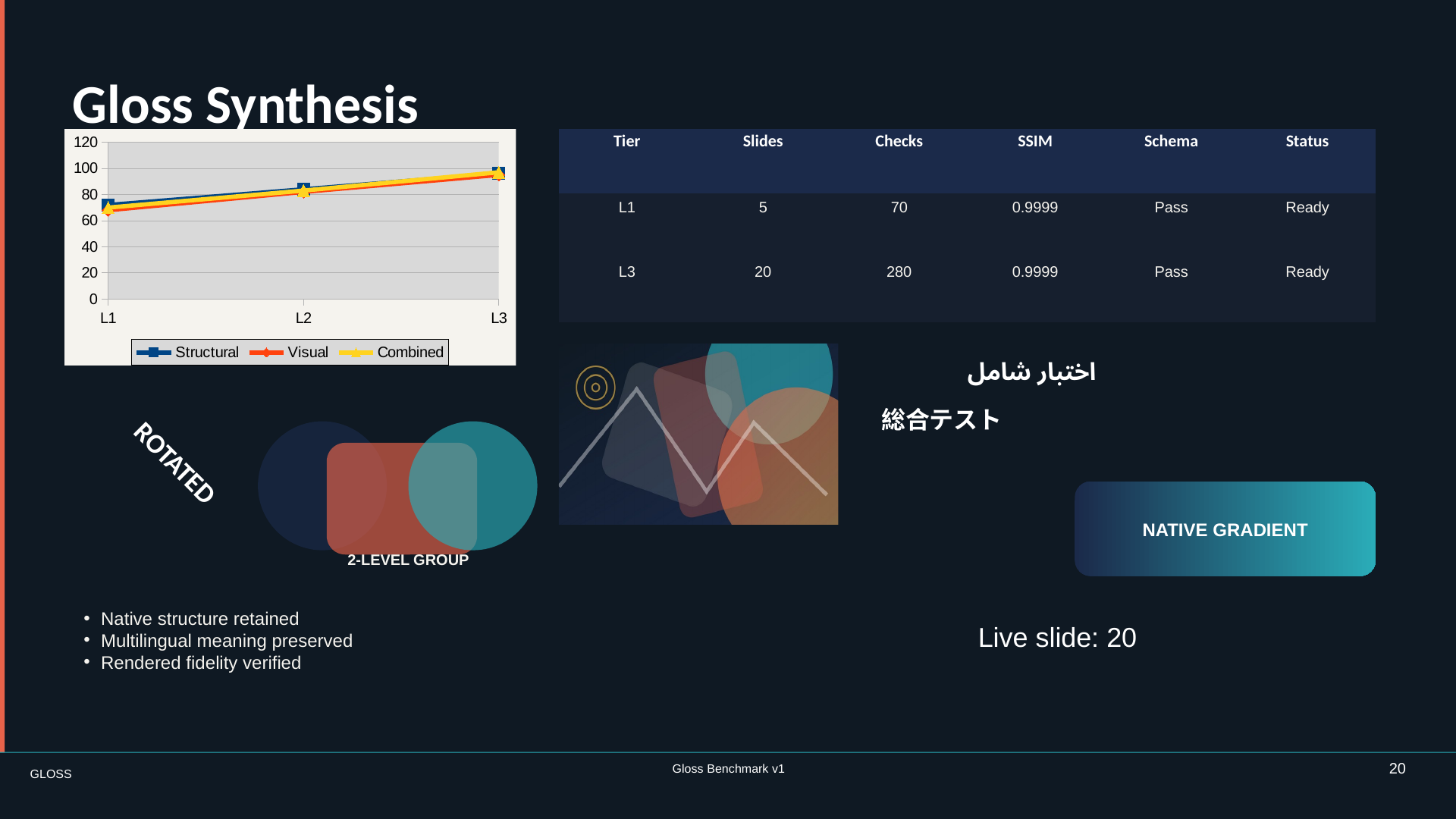
Every slide pairs a visible composition with a native behavior underneath. Open the image to see the target. Open the instructions to see exactly what the presentation must understand.
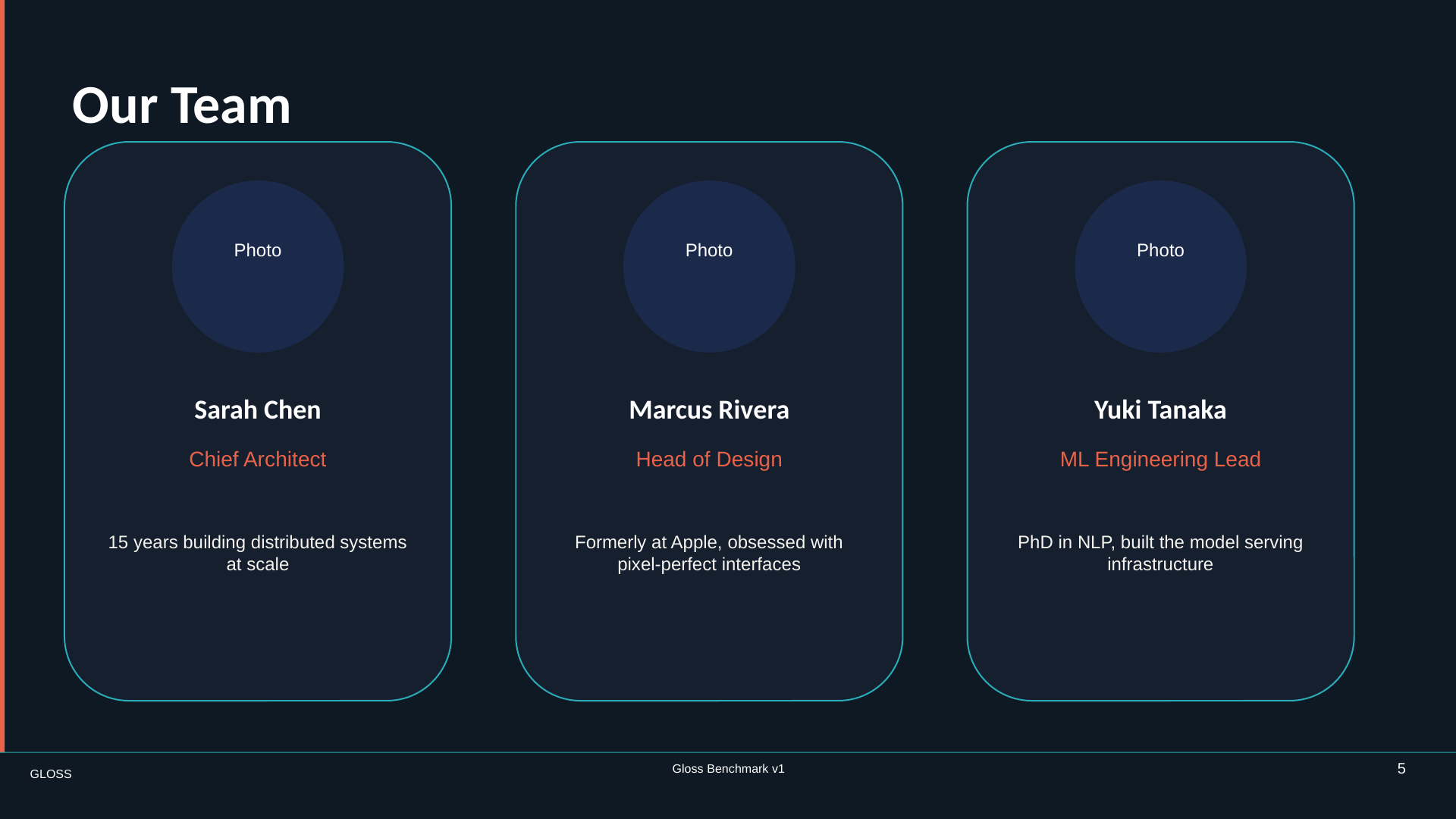
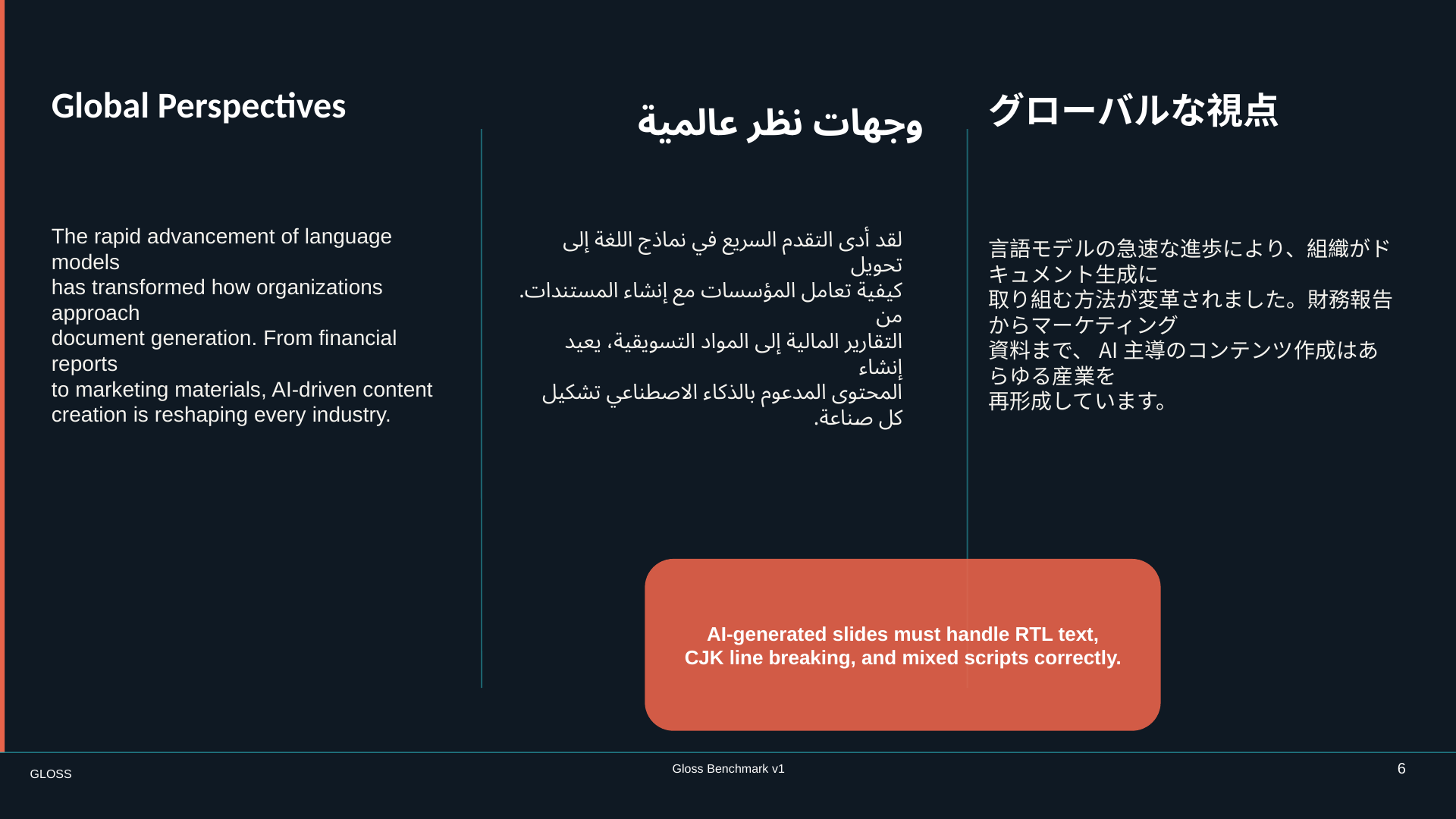
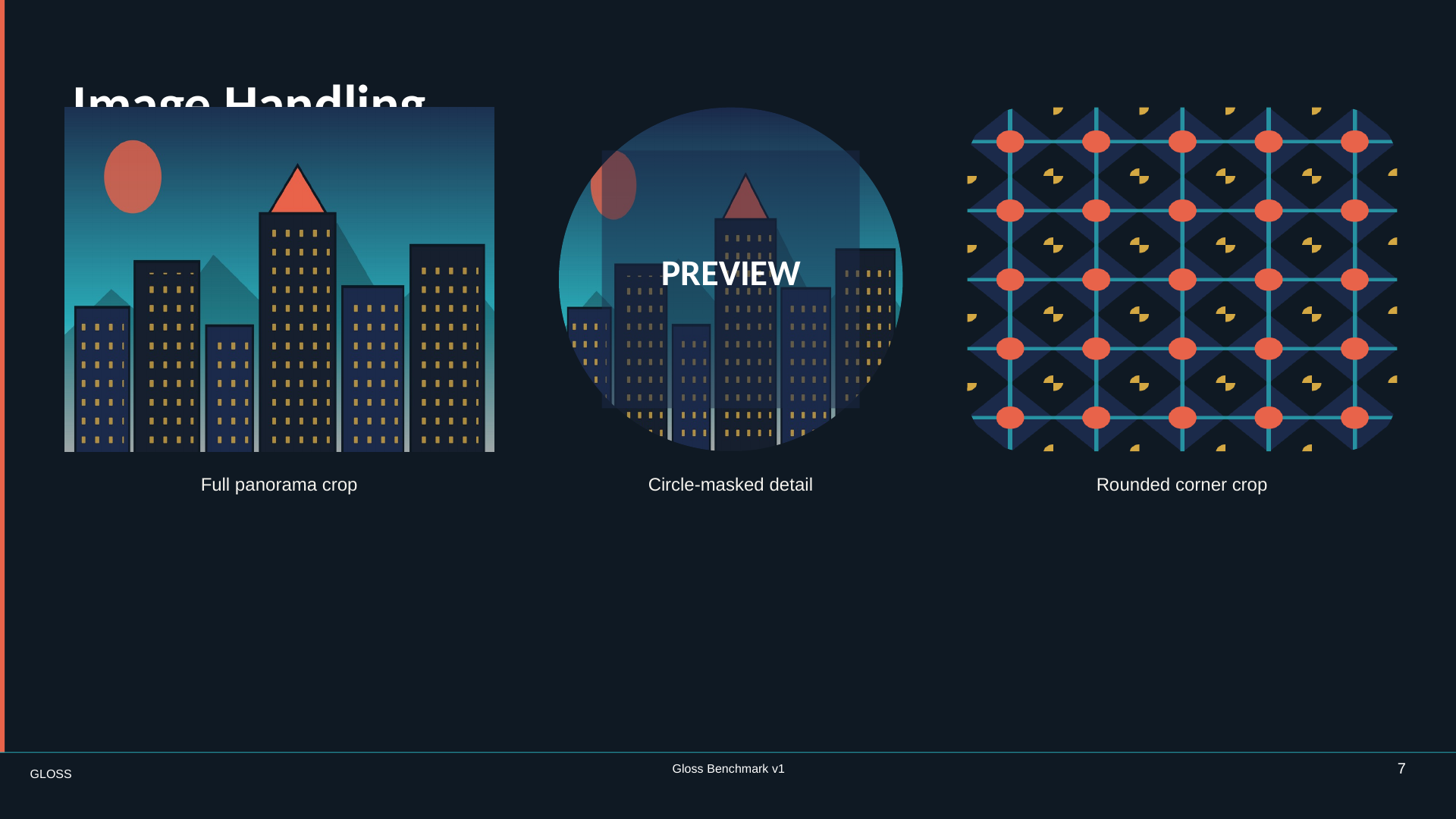
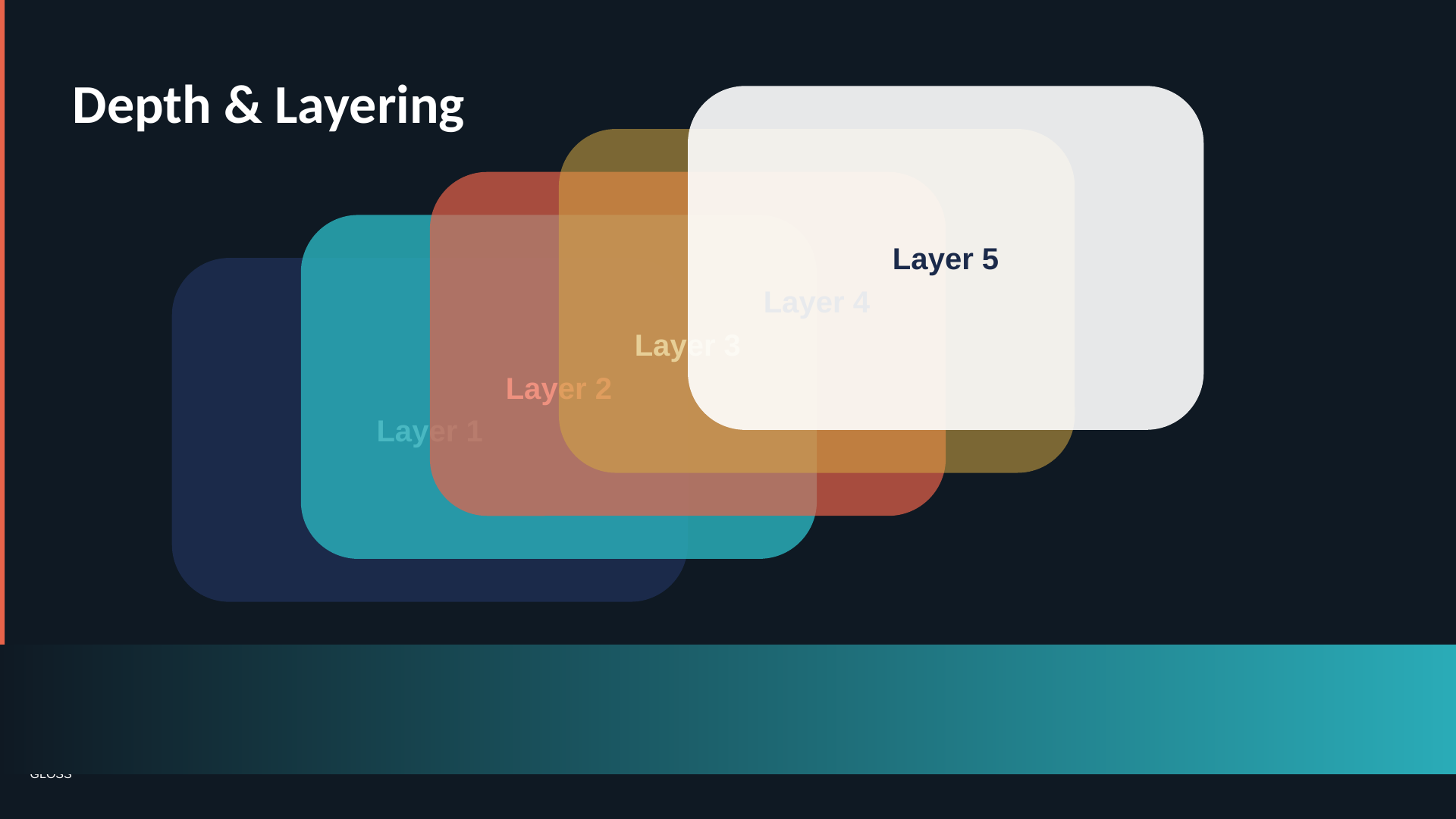
Now give it to an AI
The complete 20-slide brief is assembled in one copyable file. Give it to any presentation-generating AI with the reference images, approved assets, and fonts. Ask for a native, editable presentation. Do not give it the gold deck.
# Gloss v1 — Canonical Deck Authoring Brief

Build a real, editable presentation.

You MUST create the masters and layouts
before building slides.

Native objects required:
  charts · tables · fields · connectors
  groups · placeholders · pictures

Reference images are supplementary.
The natural-language requirements win.
The principle is bigger than one file type
Gloss is about native presentations across PowerPoint, Google Slides, and Keynote. A chart should remain a chart. Text should remain text. Layout behavior should survive the next person editing the deck.
V1 is honestly PPTX-first. OOXML is a published standard with an inspectable package and object structure, so independent local checking is possible today. The same artifact-first contract should extend to other presentation systems as reliable adapters mature.
Help define the next adapter →Public today, harder tomorrow
Gloss v1 is a shared conformance target, not a permanent secret exam. Future generations need automated challenge creation, delayed disclosure, rotating prompts, and held-back decks that measure generalization. We are publishing the starting point so the community can build that system in the open.
Gloss lives on GitHub
Propose a hard presentation behavior, reproduce a checker gap, challenge the evidence, or improve the prompt. The useful work happens in issues and pull requests.
A screenshot is not a presentation